.png)
Action Areas

What We Do
We partner with rural and indigenous people to foster healthy ecosystems and resilient communities. Our work with our partners can include skills, financing, materials, access to decision-makers and experts, hands-on experience, and other forms of support.
Projects


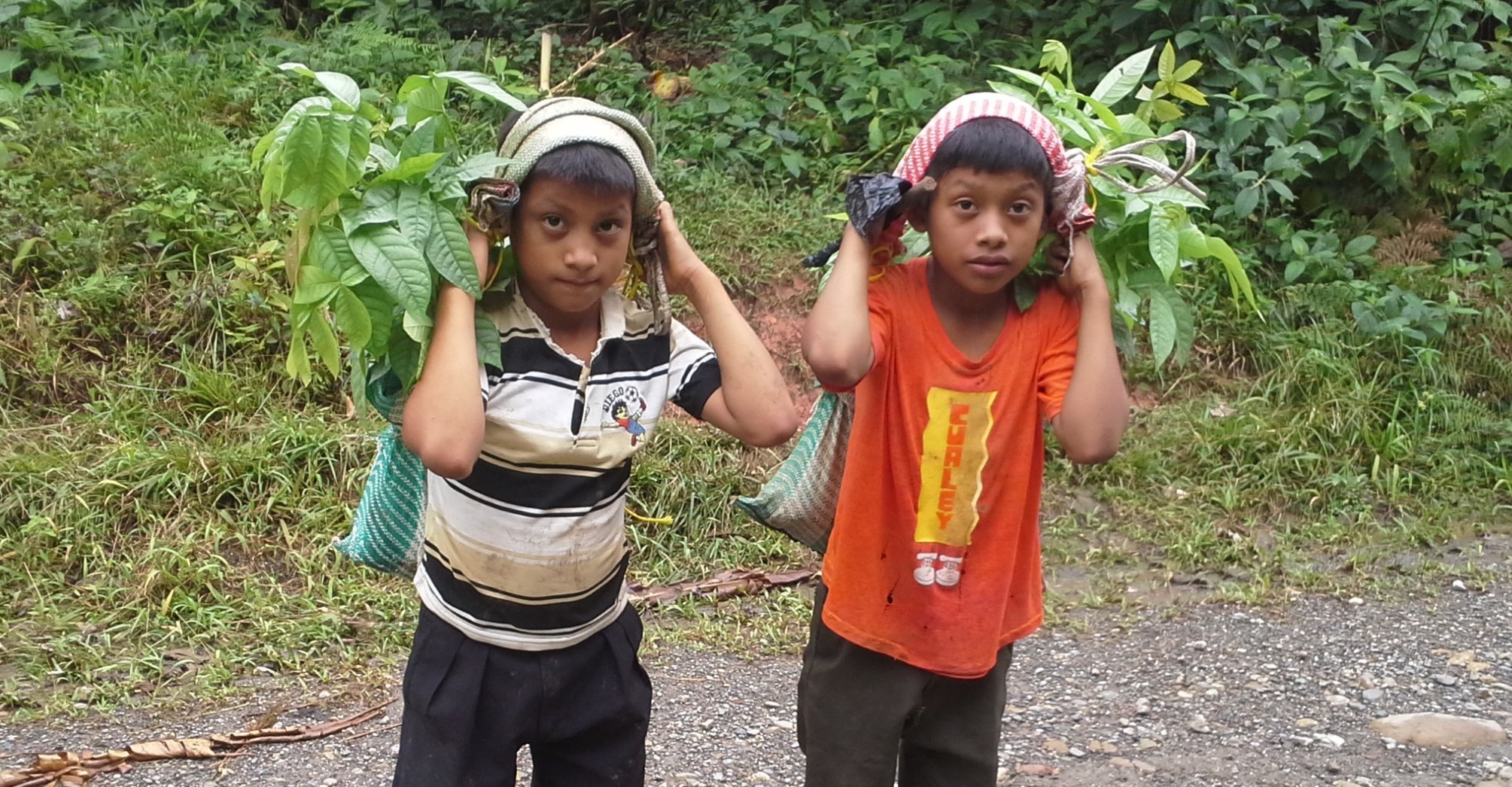


Community-Led Forest Restoration
EcoLogic undertakes reforestation by growing and planting native seedlings and saplings in places where forests have been lost or degraded. Reforestation is the largest natural pathway to achieving low-cost climate change mitigation. In addition, we work with local partners to assist natural regeneration to speed up this natural process, especially in areas where even short term forest loss will have a significant negative impact on the ecosystem. Our reforestation and regeneration efforts take place in watersheds, corridors for wildlife, or buffers for existing forests.

Sustainable Agriculture
EcoLogic trains subsistence farmers in these techniques to reduce slash-and-burn agriculture and improve food security. Integrating trees within agricultural lands has remarkable ecological and economic advantages. Agroforestry systems can replenish soil nutrients and help retain moisture; reduce erosion; increase crop yields; decrease production inputs, such as fertilizer and pesticides; reduce weeding time; and create habitat buffers and limit pressure on standing forests, thus helping other species and promoting biodiversity. Agroforestry systems also provide a source of fuelwood. Agroforestry practices are considered one of the key strategies for the development of climate-smart agriculture.

Economic Incentives
EcoLogic works with local and indigenous communities, advocating for their inclusion and participation in incentive mechanisms or Payment for Ecosystem Services (PES) programs. Culturally appropriate market‐linked approaches, such as beekeeping and agroforestry production of cash crops like cardamom and cacao, can also incentivize conservation behaviors by shifting the cost-benefit analysis of engaging in activities that result in net conservation benefits.

Healthy Homes
EcoLogic works at the household level to respond to families' needs that intersect with natural resources. This includes providing fuel-efficient cookstoves as a tool to replace open-pit fires and other inefficient cooking techniques, which are the norm throughout rural areas in Mexico and Central America. By supporting home gardens we are addressing the communities’ needs, first and foremost by providing food security and better nutrition at a critical time. The approach and materials used also emphasize sustainability by focusing on native species and incorporating perennial plants.

Environmental Education
EcoLogic develops and supports environmental education activities to promote knowledge, understanding, and action on the part of adults and children alike. We work with our local partners to devise ways to help people understand how the local ecosystem works and why its many different elements are all interdependent. Education also equips communities, especially girls and women, to be more resilient to the impacts of climate change.

Capacity-Building
EcoLogic facilitates participatory processes to strengthen the capacity of local communities and our local partners to design and apply practical, locally-contextualized strategies, monitor project impact, advocate for their priorities, and raise and manage funds independently. This commitment to meaningful participation cultivates local ownership of initiatives and increases the likelihood that project activities are sustained over the long-term.

